
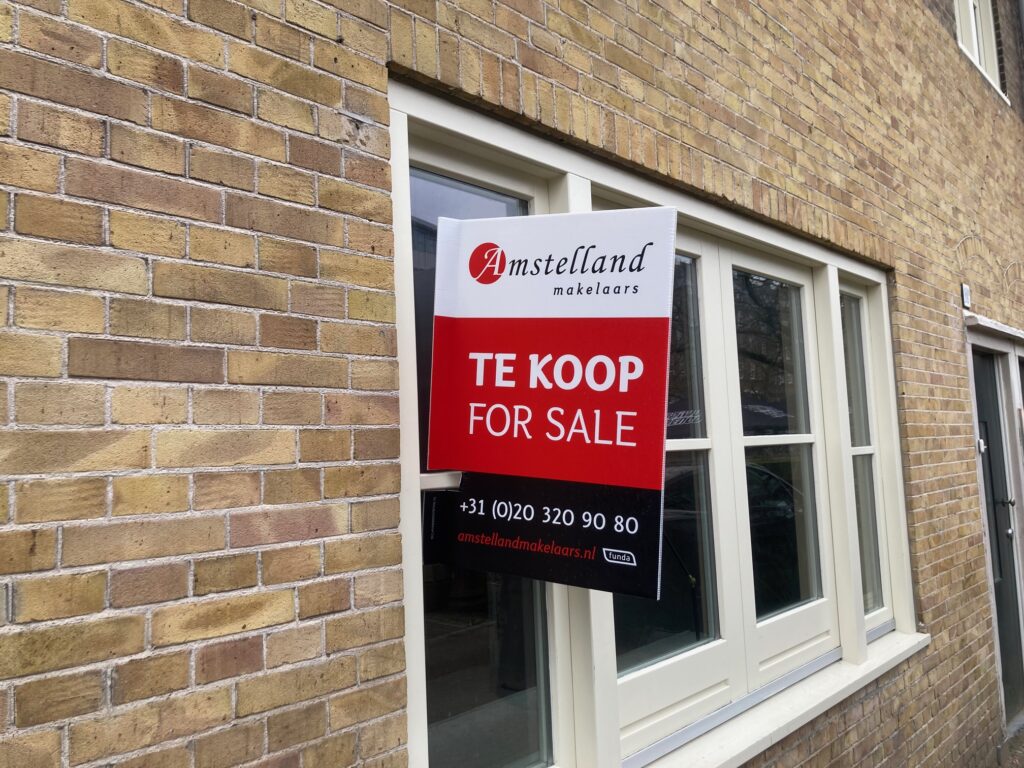
Buying a house in the Netherlands is a topic that sparks strong opinions, especially among expats and young professionals. With high property prices, rising interest rates, and a competitive housing market, many people ask the same question: does it really make sense to buy a house in the Netherlands?
The short answer is: it depends, but the Dutch fiscal system offers several important tax advantages that can make buying a home financially attractive in the medium to long term. In this article, we’ll break down the key aspects of buying a house in the Netherlands, with a special focus on fiscal benefits, costs, and long-term considerations.
The Dutch Housing Market: A Quick Overview
The Netherlands has one of the most regulated and transparent housing markets in Europe. Demand is high, especially in cities like Amsterdam, Utrecht, Leiden, Haarlem, and Rotterdam. Limited supply has pushed prices up over the last decade, making homeownership seem out of reach for many first-time buyers.
However, renting is also expensive. In many areas, monthly rent can easily exceed a mortgage payment, which is why buying deserves serious consideration.
Mortgage Interest Deduction (Hypotheekrenteaftrek)
One of the biggest fiscal advantages of buying a house in the Netherlands is the mortgage interest deduction, known as hypotheekrenteaftrek.
How it works
You can deduct the interest paid on your mortgage from your taxable income.
This reduces the amount of income tax you pay each year.
The deduction applies only to mortgages used for your primary residence.
Why it matters
If you have a high income, the tax benefit can be substantial, especially in the first years of your mortgage when interest payments are higher. Even though the deduction rate has been gradually reduced by the government, it still represents a significant annual saving.
No Capital Gains Tax on Primary Residence
Another major advantage: no capital gains tax.
If you sell your primary residence in the Netherlands:
Any profit you make is not taxed
This is very different from many other countries where property gains are heavily taxed
This makes buying a house particularly attractive if you plan to stay in the Netherlands for 5 years or more. Over time, price appreciation can effectively be tax-free wealth creation.
Transfer Tax Exemption for First-Time Buyers
The Netherlands offers a powerful incentive for young and first-time buyers.
Key points
Standard transfer tax: 2% of the purchase price
First-time buyers under 35 can pay 0% transfer tax
The property price must be below a certain threshold (adjusted periodically)
For a €400,000 house, this exemption alone can save €8,000, significantly lowering the upfront cost of buying.
Fixed Monthly Costs vs Rising Rent
When you buy a house, your largest monthly expense becomes your mortgage payment, which is relatively stable over time. Rent, on the other hand, tends to increase every year.
In many Dutch cities:
Rent increases are linked to inflation
Free-market rentals can rise sharply
Long-term renters face uncertainty
Buying converts your housing cost into a predictable long-term expense, which is especially valuable in times of high inflation.
Box 1 vs Box 3: Why Your Home Is Treated Favorably
In the Dutch tax system:
Your primary residence falls under Box 1
Investments and savings are taxed in Box 3
This distinction matters because:
Your home is not treated as an investment
You don’t pay wealth tax on the full property value
Only a small imputed rental value (eigenwoningforfait) is added to your income
In practice, the tax burden on owner-occupied housing is relatively low compared to other assets.
Additional Costs to Consider
While the fiscal advantages are strong, buying a house in the Netherlands is not free of costs.
One-time costs
Notary fees
Mortgage advisor fees
Property valuation
Technical inspection
National Mortgage Guarantee (NHG), if applicable
Ongoing costs
Property maintenance
Municipal taxes
Homeowner association fees (VvE)
These costs should be carefully budgeted, but they don’t necessarily outweigh the long-term benefits.
Does Buying Make Sense for Expats?
For expats, the decision depends mainly on how long you plan to stay.
Buying usually makes sense if:
You plan to stay at least 4–5 years
You have stable income in the Netherlands
You qualify for a mortgage
You want protection against rising rent
If your stay is uncertain or very short-term, renting may still be the safer option.
Long-Term Financial Perspective
From a purely financial point of view, buying a house in the Netherlands can be seen as:
Forced saving through mortgage repayment
Inflation protection
Tax-efficient wealth accumulation
Combined with fiscal advantages like mortgage interest deduction and zero capital gains tax, homeownership can be a powerful long-term strategy.
Final Verdict: Is Buying a House in the Netherlands Worth It?
So, does it make sense to buy a house in the Netherlands?
👉 Yes, if you think long-term and can afford it.
The Dutch fiscal system strongly favors owner-occupied housing, especially for first-time buyers and high-income professionals.
While high prices and competition are real challenges, the combination of tax advantages, rent savings, and capital appreciation makes buying a house a rational and often rewarding decision.
If you are planning to build a life in the Netherlands, buying a home is not just an emotional choice — it can be a smart financial move.